Read the composition and receiving surface
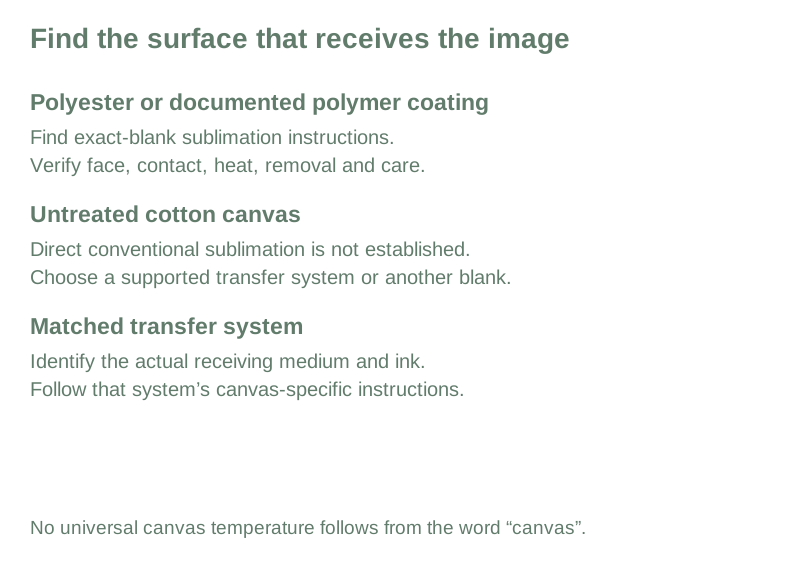
“Canvas” alone cannot answer the compatibility question. Find the exact item’s fiber content, surface treatment and intended decoration process. Epson’s dye-sublimation overview requires polyester fabric or a polymer-coated surface. An ordinary cotton canvas bag, artist canvas and a purpose-made polyester blank therefore need different checks. The word “canvas” on a listing does not supply any of those missing facts.
Scroll horizontally to compare all columns.
| What you have | What to establish before heating |
|---|---|
| Ordinary cotton canvas, with no sublimation coating documented | Direct dye sublimation is not established; choose a supplier-supported transfer system or another blank |
| Polyester canvas sold for sublimation | Exact composition, printable face, usable area and the supplier’s complete press/care instructions |
| A rigid or stretched canvas with a claimed coating | The coating’s supported process and whether the blank’s construction permits the required contact and pressure |
| Canvas used with a separate transfer layer | Exact ink/media pairing, canvas compatibility, heat, peel and care from that system’s supplier |
Keep the ink-and-paper system together
Sawgrass’s September 2026 two-paper explanation names canvas among VersiFlex Light textile applications. That uses the VersiFlex ink system; it is not evidence that conventional SubliJet UHD printed onto ordinary sublimation paper will decorate untreated cotton canvas. The article does not identify an exact canvas SKU with a complete recipe, so it cannot finish your particular bag or artist-canvas project.
The same care applies to an added film such as the EasySubli route: the receiving material and its adhesive application become part of the finished item. Keep the material’s feel, edges and care requirements in the decision. Do not describe an added transfer film as dye directly bonding to untreated cotton.
Choose a blank you can identify
A familiar-looking tote can hide a different fiber. Cricut’s medium tote, item 2006830, is documented as 100% polyester and optimized for Infusible Ink. That makes it a useful example of why appearance is insufficient; it does not make every canvas-looking tote compatible. Our tote project keeps its actual artwork-area and equipment-scope checks visible.
Before buying, ask the seller for the exact blank SKU, receiving face, fiber/coating, supported ink or transfer medium, pressing surface, complete heating/removal instructions and finished-item care. If the item is stretched over a frame, ask how the required flat contact is achieved. Do not apply a generic fabric temperature to wood stretcher bars, coatings or an unsupported adhesive layer.
What we can and cannot offer here
This is a compatibility answer, not a tested canvas tutorial. The current source set does not establish one exact canvas blank plus press, complete preparation/peel/care and an observed finished result. We therefore give no universal canvas temperature or promise that a coating spray fixes an unknown item.
If you want a source-documented first project now, choose the printed hardboard coaster or cut-sheet square coaster. If you already own a canvas item, record its identity and missing instructions on the blank setup card before ordering a transfer system.
Sources and review date
Epson’s process overview, Sawgrass’s September 2, 2026 paper-system explanation, and Cricut’s exact medium tote listing. Canvas-specific source scope reviewed October 3, 2026. The decision diagram is original; no successful canvas output is claimed.
Page address: https://makepressrepeat.com/guides/can-you-sublimate-on-canvas